In today’s competitive business environment, corporate events play an important role in building professional relationships, sharing knowledge, promoting brands, and creating new business opportunities. From international conferences and corporate meetings to exhibitions and incentive travel programs, businesses use events to connect with employees, customers, partners, and industry professionals.
This is where MICE event management becomes important. MICE is a specialized segment of the events industry that focuses on organizing business-related gatherings and experiences. It involves everything from selecting venues and coordinating travel to managing event production, hospitality, and attendee experiences.
But what exactly is MICE event management, and why is it important for businesses? Let’s explore its meaning, components, benefits, and planning process.
What Is MICE Event Management?
The term MICE represents four major categories of corporate and business events. Each category serves a different purpose, but all focus on bringing people together for professional, educational, networking, or business development opportunities.
A professional MICE event management company handles different aspects of these events, including:
- Event concept development and planning
- Venue selection and booking
- Travel and accommodation arrangements
- Delegate registration and management
- Stage design and event production
- Audio-visual and technical arrangements
- Catering and hospitality management
- On-site coordination and event execution
The main objective is to deliver a well-organized experience that meets business goals while ensuring everything runs smoothly.
What Does MICE Stand For?
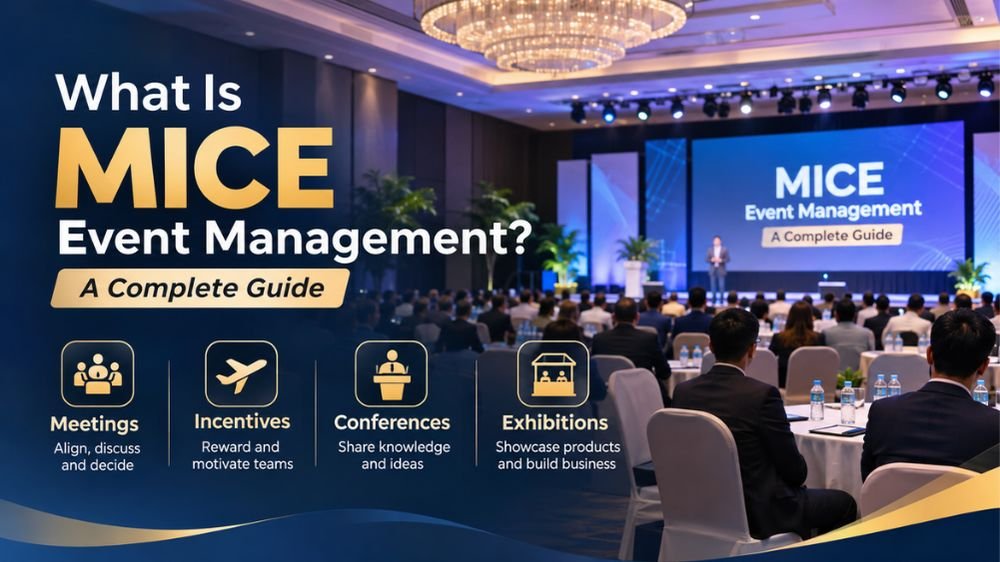
MICE covers four types of business activities, including corporate meetings, incentive-based experiences, professional conferences, and business exhibitions. Let’s understand each component in detail.
1. Meetings
Meetings are organized gatherings where business professionals come together to discuss ideas, make decisions, share updates, or develop strategies.
Corporate meetings can be organized for employees, management teams, clients, business partners, or stakeholders.
Examples include:
- Board meetings
- Business strategy meetings
- Annual general meetings
- Sales meetings
- Leadership meetings
- Corporate workshops
- Team meetings
Successful corporate meeting management requires proper scheduling, venue arrangements, technical support, and coordination among participants.
A professional event organizer ensures that the meeting environment is comfortable, organized, and suitable for productive discussions.
2. Incentives
Incentive events are designed to recognize and reward employees, business partners, or sales teams for their achievements and contributions.
Companies organize incentive programs to improve employee motivation, encourage performance, and strengthen professional relationships.
Some popular corporate incentive activities include:
- Corporate incentive trips
- Employee reward programs
- Team-building activities
- Destination-based corporate retreats
- Recognition ceremonies
- Luxury hospitality experiences
It gives employees an opportunity to enjoy new destinations while feeling appreciated for their performance.
A well-planned incentive program can create positive experiences and encourage employees to remain engaged with organizational goals.
3. Conferences
Conferences are professional gatherings where individuals from specific industries or business sectors meet to exchange knowledge, discuss developments, and share expertise.
They can range from small industry seminars to large international conferences involving hundreds or thousands of participants.
Common types of conferences include:
- Corporate conferences
- Medical conferences
- Technology conferences
- Business leadership summits
- Industry seminars
- International business conferences
- Educational conferences
Conference management involves several important activities, such as speaker coordination, agenda planning, delegate registration, stage management, presentation arrangements, and audio-visual production.
Professional conference organizers help create a structured environment where speakers and attendees can interact effectively.
4. Exhibitions
Exhibitions provide businesses with an opportunity to showcase their products, services, innovations, and technologies to potential customers, investors, and industry professionals.
They are often organized in convention centres, exhibition halls, hotels, and large event venues.
Examples include:
- Trade exhibitions
- Industry expos
- Product exhibitions
- Technology exhibitions
- Business trade shows
- B2B networking exhibitions
- Corporate brand showcases
Exhibition management includes stall design, booth construction, branding, visitor registration, exhibitor coordination, lighting, and event logistics.
A professionally managed exhibition helps businesses present their offerings effectively, attract visitors, and generate potential business leads.
Why Is MICE Event Management Important for Businesses?
MICE events are more than just professional gatherings. They provide opportunities for businesses to connect with people, strengthen their market presence, and achieve specific organizational objectives.
Here are some important benefits.
1. Builds Professional Relationships
Corporate meetings, conferences, and exhibitions create opportunities for businesses to interact with clients, partners, suppliers, and industry professionals.
These interactions help develop long-term business relationships and encourage collaboration.
2. Improves Brand Visibility
Participating in exhibitions, trade shows, and corporate events allows companies to introduce their brands to a wider audience.
Professional event branding, promotional displays, and engaging presentations can help businesses create a memorable impression.
3. Encourages Employee Motivation
Incentive programs and corporate retreats help organizations recognize employee achievements.
These experiences can improve team engagement, strengthen workplace relationships, and encourage better performance.
4. Creates Networking Opportunities
MICE events bring together professionals from different industries and backgrounds.
Attendees can exchange ideas, explore partnerships, discover new opportunities, and learn about industry developments.
5. Supports Business Growth
Product launches, exhibitions, conferences, and business networking events can help organizations reach potential customers, generate leads, and introduce new products or services.
What Are the Different Types of MICE Events?
MICE event management covers a wide range of professional gatherings. Some of the most common event formats include:
Corporate Events: Annual celebrations, award ceremonies, employee engagement programs, leadership gatherings, and company milestone events.
Business Conferences: Industry summits, corporate seminars, knowledge-sharing sessions, and professional conferences.
Exhibitions and Trade Shows: Product showcases, industry expos, business exhibitions, and B2B trade fairs.
Incentive Travel Programs: Employee reward trips, corporate retreats, destination experiences, and team-building travel.
Product Launch Events: Business events organized to introduce new products, services, technologies, or brands.
International MICE Events: Large-scale business gatherings involving international delegates, speakers, exhibitors, and business representatives.
Each event type requires a different planning approach, depending on its audience, objectives, budget, and scale.
How Does the MICE Event Planning Process Work?
Organizing a successful MICE event requires detailed planning, proper coordination, and attention to every operational detail.
A professional MICE event company generally follows these steps.
Step 1: Understand the Event Objectives
The first step is understanding why the business wants to organize the event.
Is it for employee engagement, networking, product promotion, knowledge sharing, or business development?
Defining clear objectives helps determine the event format, audience, venue, and overall strategy.
Step 2: Prepare the Event Budget
Budget planning is an essential part of corporate event management.
The event budget may include:
- Venue rental
- Travel and accommodation
- Stage and exhibition setup
- Audio-visual equipment
- Food and beverages
- Branding and promotional materials
- Event staffing
- Transportation and logistics
A well-prepared budget helps businesses manage expenses and allocate resources effectively.
Step 3: Select the Right Venue
The location should be suitable for the event size, audience, accessibility requirements, and technical arrangements.
Hotels, convention centres, exhibition halls, and conference facilities are commonly considered for MICE events.
Step 4: Manage Travel and Accommodation
For events involving participants from different cities or countries, travel and accommodation arrangements become important.
This may include flight bookings, hotel reservations, airport transfers, local transportation, and delegate hospitality.
Proper coordination ensures a comfortable experience for participants.
Step 5: Coordinate Event Production
Event production focuses on designing and arranging the venue’s setup, equipment, and technical elements to support the event.
It may include:
- Stage design and fabrication
- LED screens and projection systems
- Sound and lighting arrangements
- Branding and signage
- Exhibition stall setup
- Presentation and technical support
These elements help create a professional atmosphere and support the event’s overall objectives.
Step 6: Manage Registration and Delegates
Delegate management includes handling attendee registration, invitations, entry passes, guest lists, and participant communication.
For larger conferences and exhibitions, digital registration systems can simplify the process and improve attendee management.
Step 7: Execute and Monitor the Event
The final stage is on-site event execution.
Event coordinators monitor schedules, manage vendors, assist speakers, handle technical requirements, and resolve unexpected issues.
Effective coordination ensures that the event stays organized and runs according to plan.
How to Choose the Right MICE Event Management Company?
Choosing the right event management partner is an important decision for any organization.
Before selecting a MICE event company, businesses should consider the following factors:
Industry Experience: Look for an event management team with experience in corporate events, conferences, exhibitions, and business gatherings.
Planning and Coordination: Check whether the company can manage different event requirements, timelines, vendors, and logistics.
Creative Capabilities: Stage design, event branding, exhibition booths, and presentation setups contribute to the overall experience.
Technical Expertise: Audio-visual production, lighting, sound systems, LED displays, and technical support are important for professional events.
Budget Management: A reliable event partner should understand the client’s budget and provide suitable planning solutions.
Execution Capabilities: Good planning must be supported by efficient on-site coordination and event management.
Reviewing previous projects, client feedback, and event portfolios can also help businesses make an informed decision.
What Is the Future of MICE Event Management?
The MICE industry continues to evolve as businesses adopt new technologies and look for more engaging ways to connect with people.
Some important developments shaping the industry include:
- Hybrid events: Combining physical and virtual participation to reach wider audiences.
- Event technology: Using digital registration, event applications, and attendee management platforms.
- Sustainable event planning: Reducing waste, using eco-friendly materials, and adopting responsible event practices.
- Interactive experiences: Incorporating live demonstrations, audience engagement, and immersive event environments.
- Personalized experiences: Designing events around attendee interests and business objectives.
These developments are creating new opportunities for event organizers to deliver more efficient, engaging, and memorable business events.
FAQS About MICE Event Management
1. What is the full form of MICE in event management?
MICE stands for Meetings, Incentives, Conferences, and Exhibitions. It represents four major categories of business-related events.
2. What does a MICE event management company do?
A MICE event management company plans and coordinates business events, including corporate meetings, conferences, incentive travel programs, and exhibitions. Its responsibilities may include venue selection, logistics, hospitality, event production, and on-site execution.
3. What is the difference between MICE and corporate event management?
Corporate event management generally focuses on business-related gatherings such as annual days, meetings, product launches, and employee events. MICE is a specialized segment that includes Meetings, Incentives, Conferences, and Exhibitions, often involving travel and tourism-related arrangements.
4. What are the four components of MICE?
The four components are Meetings, Incentives, Conferences, and Exhibitions. Each serves a different purpose, from business discussions and employee rewards to knowledge sharing and product showcasing.
5. Why do businesses organize MICE events?
Businesses organize MICE events to improve professional networking, build brand awareness, motivate employees, share industry knowledge, showcase products, and develop business relationships.
6. How do I select a professional MICE event organizer?
Consider the organizer’s industry experience, event portfolio, planning capabilities, technical expertise, budget management, vendor network, and ability to execute events professionally.
Conclusion
MICE event management plays an important role in bringing businesses, professionals, and industry leaders together. From corporate meetings and incentive travel to conferences and exhibitions, every event creates opportunities for communication, networking, learning, and business development.
However, successful MICE events require much more than booking a venue and arranging facilities. They involve detailed planning, creative event production, logistics management, hospitality, and professional coordination.
Working with an experienced event management partner can help businesses organize events that are well-structured, engaging, and aligned with their objectives.